Every pair ships with its own curve
We measure the frequency response of each unit we ship and put the sheet in the box, with the deviation from reference written in decibels.





The measurement room behind the shop
An ear coupler, a calibrated microphone and an acoustically treated room. We do not publish graphs sent by manufacturers: if a model does not go through our room, it does not go on the site.
Why the list is short
We keep around forty models, not four hundred. For a new one to come in, it has to solve something none of the ones on the shelf solve: a different impedance, a different signature, a different way of wearing it. When a model duplicates another, we drop the older one and say so on its page, so nobody is left with a pair we have no parts for.
Listening, parts, recabling
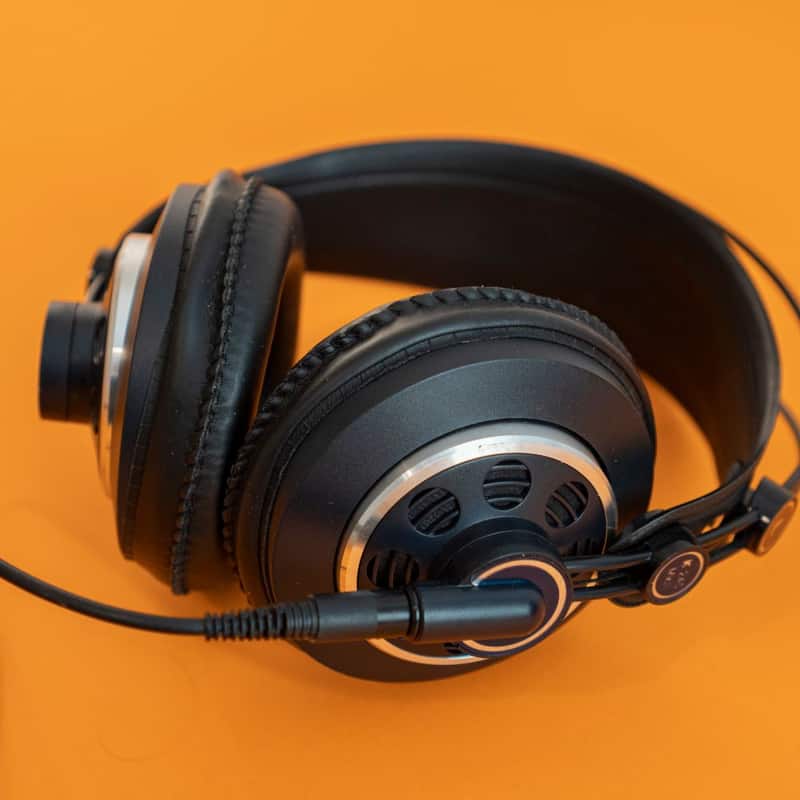
Listen in the shop
Bring your own music, on a stick or from your phone. Two hours booked in your name, with no obligation to buy.
Parts in stock
Pads, headbands, cables and plugs for every model listed, kept at least five years after it is discontinued.
Recabling at our bench
We swap a fixed cable for a detachable or balanced one, soldered here, with measurements before and after.